<img src="https://ws.zoominfo.com/pixel/FY6aNOEtNc0oa0twjhax" width="1" height="1" style="display: none;">
crane_logo
Shop the E-Store
Request A Quote

Progressive Cavity Pumps for Industrial, Sanitary & Municipal Applications

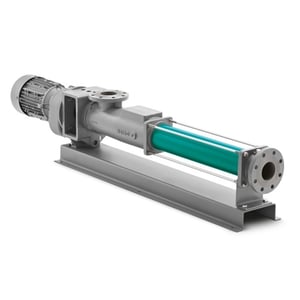
Crane Engineering offers progressive cavity pumps for pumping a wide variety of fluids with low shear and pulsation. 

wave

What Is a Progressive Cavity Pump?

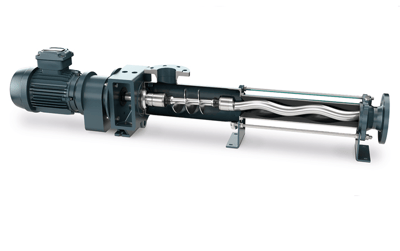
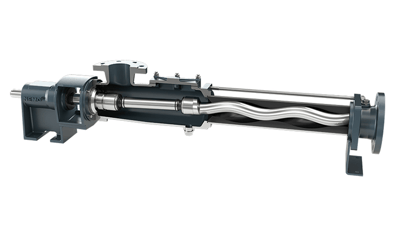
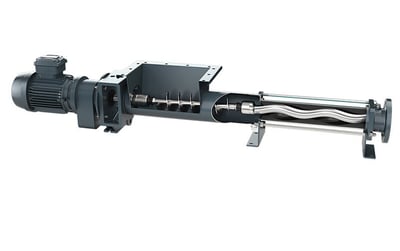
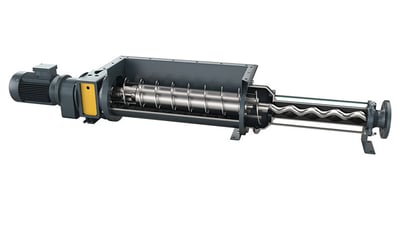
A progressive cavity (PC) pump is a positive displacement pump that transfers fluid through a sequence of sealed cavities formed between a rotating metallic rotor and an elastomeric stator. The rotor follows an eccentric path inside the stator, creating cavities that move axially from suction to discharge.

Because each cavity remains sealed from adjacent cavities, flow remains steady and predictable across a wide pressure range, provided operation stays within design limits. This operating principle makes progressive cavity pumps well suited for viscous, shear-sensitive, abrasive, and solids-laden fluids where consistent flow is required.

Not sure what to choose? Ask us about it! We provide technical assistance to businesses and municipalities in Wisconsin, Minnesota, Iowa, Michigan, NE Ohio, North Dakota, and South Dakota.

Key Manufacturers We Carry:

  • Netzsch (Industrial)
  • Moyno (Municipal)

Common Applications

  • Water & Wastewater
  • Oil & Gas
  • Food & Beverage
  • Chemical Processing
  • Pulp & Paper
  • Mining & Drilling

Filter by manufacturer:

Filter by industry:

Progressive Cavity Pumps Available from Crane Engineering

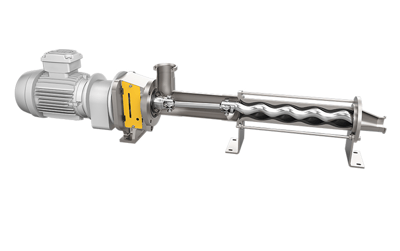
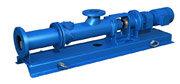
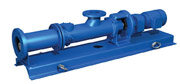
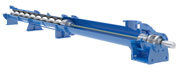
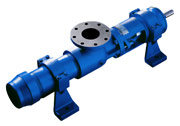
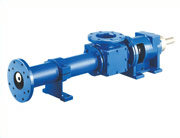
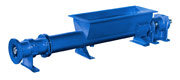
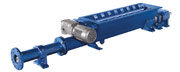
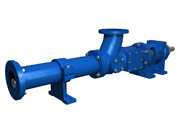
Crane Engineering supplies progressive cavity pumps from established manufacturers, including NETZSCH and Moyno. Available configurations support a wide range of industrial, municipal, and sanitary applications, including standard, hopper, vertical, and open-throat designs.

Progressive cavity pumps operate through controlled cavity progression rather than centrifugal force. As the rotor turns inside the stator:

  • Cavities form at the suction end
  • Cavities progress continuously toward the discharge
  • Cavity volume remains nearly constant
  • Fluid moves with low pulsation and minimal shear

Flow rate is directly proportional to rotational speed. Pressure capability is achieved by adding stator stages rather than increasing speed. Operating limits depend on stator elastomer compatibility, fluid temperature, solids characteristics, and suction conditions.
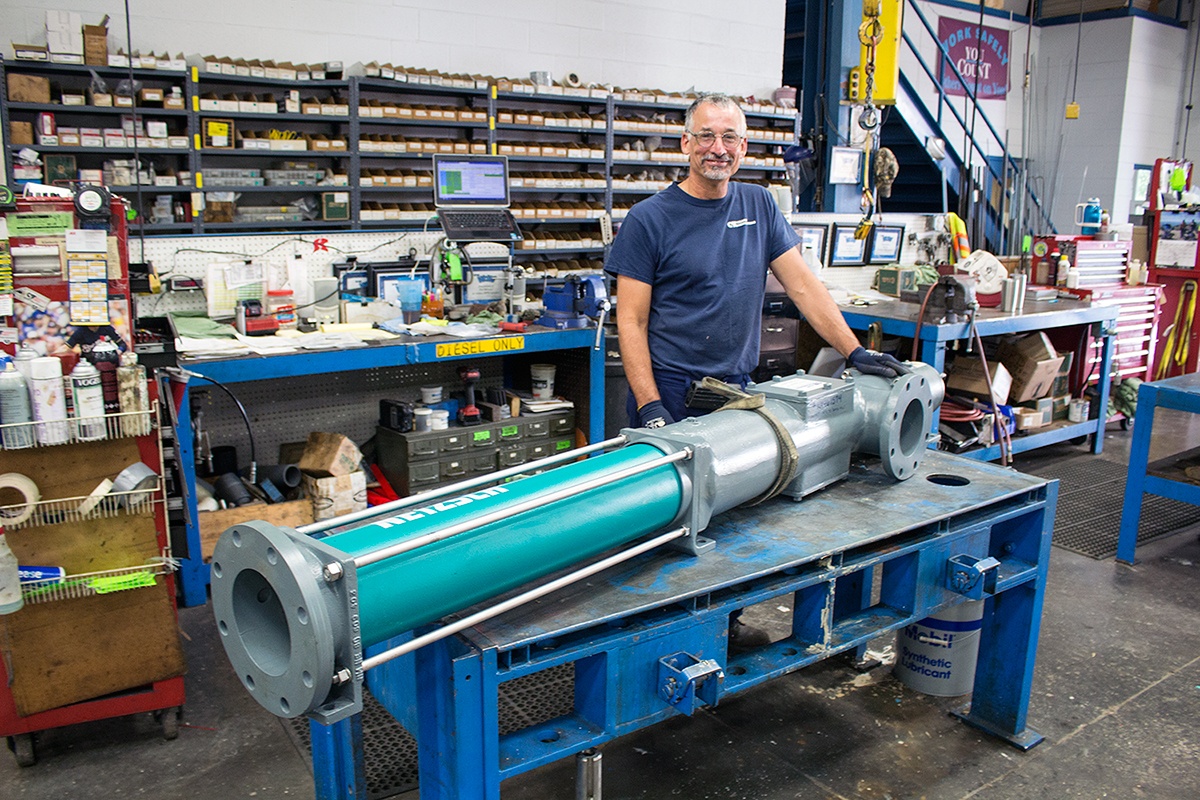
netzsch-paul

Progressive cavity pump selection is application-specific and typically evaluates multiple factors rather than pump size alone.

  • Fluid Characteristics: Viscosity, shear sensitivity, solids size and concentration, abrasiveness, and chemical compatibility with stator elastomers.
  • Hydraulic Requirements: Required flow rate, discharge pressure, total dynamic head, and suction conditions.
  • Mechanical Considerations: Number of stator stages, rotor and stator materials, drive configuration, and speed control strategy.
  • Lifecycle Considerations: Initial equipment cost varies by configuration. Operating cost is influenced by stator wear rate, speed, fluid abrasiveness, and maintenance access. Service intervals depend more on operating conditions than on pump design alone.
IMG_0793

People Also Ask (PAA)

1 Year Warranty on Repairs

Want a guarantee on your repair? You got it. We guarantee our work for 1 year.

crane_service_truck_on_road

Talk to Our Service Team